Arms · Dumbbell · Beginner
Dumbbell Overhead Triceps Extension
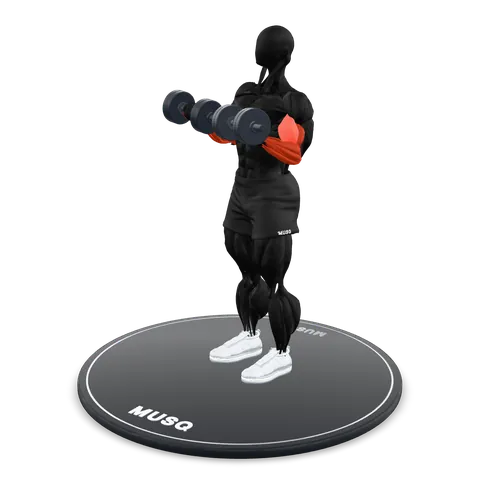
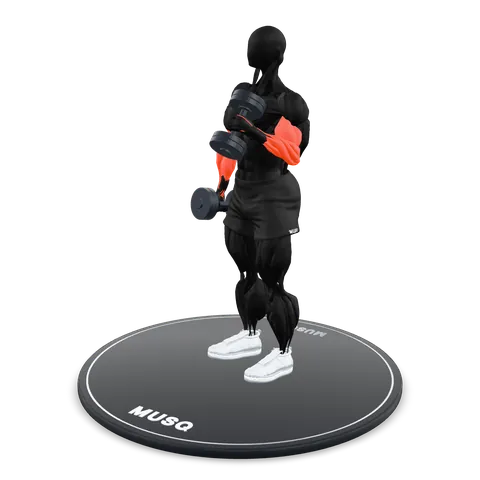
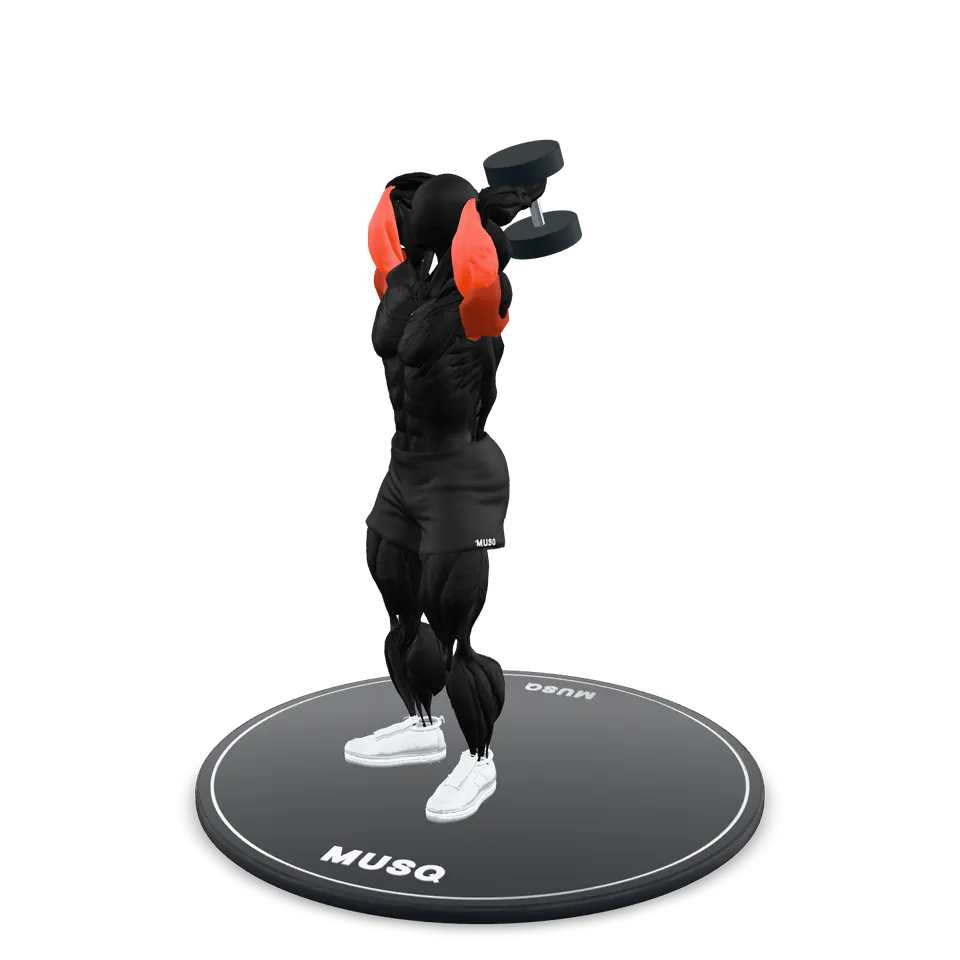
The overhead triceps extension trains the triceps with the arms raised over your head, holding one dumbbell with both hands. Lowering the weight behind your head stretches the long head of the triceps more than most triceps exercises, which makes it a great builder for the back of the arm.
- Primary muscles
- Triceps Brachii
- Equipment
- Dumbbell
- Level
- Beginner
- Sets × reps
- 3–4 × 10–15
- Rest
- 60–90 s
Muscles worked
Estimated activation, matching the orange paint on the 3D model.
- Triceps Brachiiprimary
- Posterior Deltoidsecondary
How to do the dumbbell overhead triceps extension
- Stand with your feet about hip width apart and hold one dumbbell with both hands under its top plate.
- Press it overhead to straight arms, upper arms close to your head.
- Brace your abs so your ribs stay down and your lower back doesn't arch.
- Bend your elbows to lower the dumbbell behind your head, elbows pointing forward.
- Keep your upper arms still while only your forearms move.
- Straighten your elbows to press the dumbbell back overhead.
Form cues and common mistakes
The same coaching points MUSQ shows on the lifter in the app.
Grip
Two hands hold one dumbbell.
Why it mattersCupping the top plate with both palms keeps the dumbbell secure and the wrists straight overhead.
Common mistakeGripping the handle loosely with the fingers, so the dumbbell tips as it lowers.
Do this insteadHold the dumbbell vertically by its top plate, palms flat against it and thumbs wrapped around the handle.
Elbow Position
The elbows point forward, not out.
Why it mattersKeeping the elbows close to the head and pointing forward holds the upper arm still, so only the elbow bends; flared elbows shift the load to the shoulders.
Common mistakeElbows splaying out to the sides as the weight lowers.
Do this insteadKeep the elbows about shoulder-width, pointing forward, from the bottom of the rep to the top.
Upper Arm Position
The upper arms stay fixed beside the head.
Why it mattersStill upper arms keep the work on elbow extension; letting them swing forward turns the lift into a pullover.
Common mistakeUpper arms dropping forward as the weight comes up.
Do this insteadKeep the upper arms close to the ears and let only the forearms move.
Trunk Control
Reaching overhead tempts the lower back to arch.
Why it mattersKeeping the ribs down and the core braced stops the lower back arching to make room for the weight.
Common mistakeArching the lower back and flaring the ribs to get the arms overhead.
Do this insteadBrace the abs, squeeze the glutes and keep the ribs stacked over the pelvis.
Stance
A stable stance keeps the body out of the lift.
Why it mattersA split or hip-width stance with soft knees gives the arms a still base to extend from.
Common mistakeLocked knees and a narrow stance that sways with each rep.
Do this insteadStand with the feet hip-width or one foot forward, knees soft, and hold that position.
● Free on the App Store
Train every lift in 3D with MUSQ
Nearly 500 exercises in 3D, x-ray set-up demos, stretching and a plan built around the days you train. MUSQ is free on iPhone.
Dumbbell Overhead Triceps Extension FAQ
What muscles does the overhead triceps extension work?
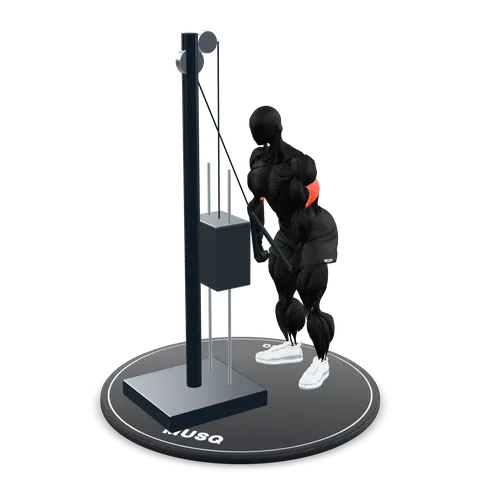
The triceps, especially the long head, which is stretched with the arms overhead. That makes it a good partner to pushdowns.
Standing or seated overhead extension?
Both work. Sitting on a bench with a back support makes it easier to keep the lower back from arching; standing asks more of the core.
Why do my elbows flare on overhead extensions?
Usually the weight is too heavy or the shoulders are tight. Use a lighter dumbbell and keep the elbows pointing forward, close to your head.