Arms · Dumbbell · Beginner
Dumbbell Curl
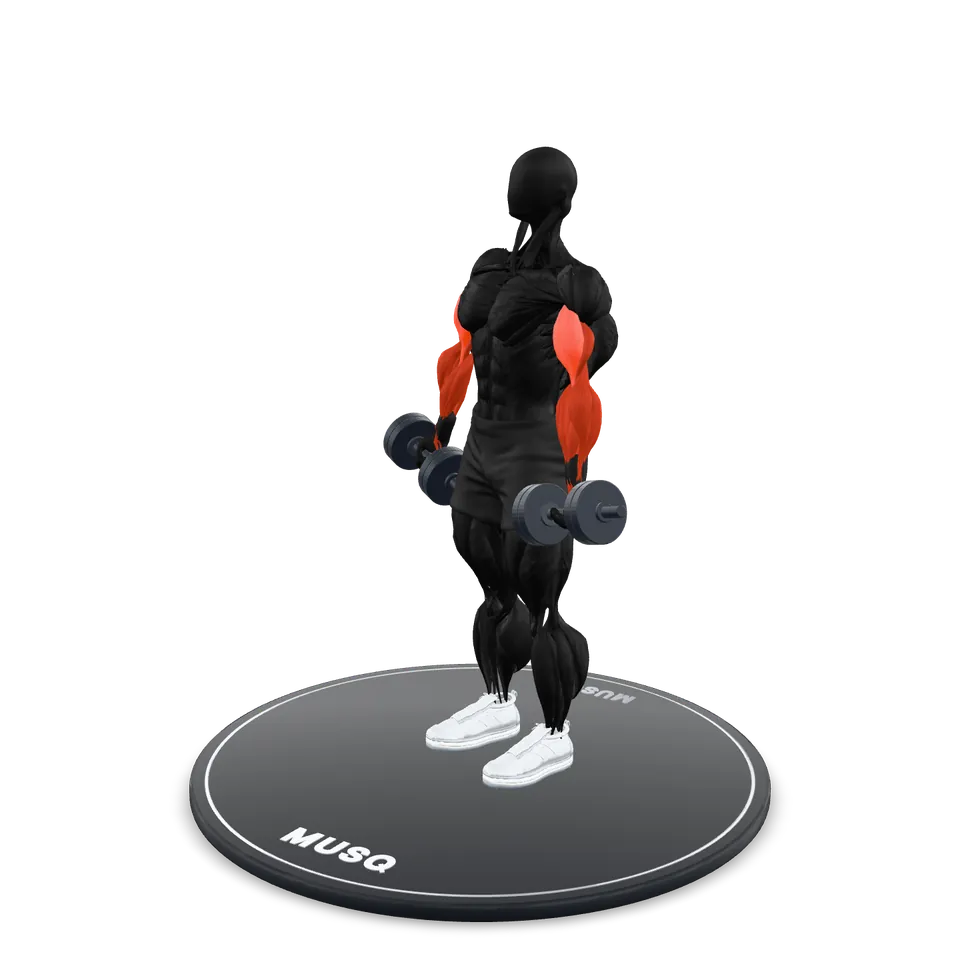
The dumbbell curl is the classic biceps exercise. Standing with a dumbbell in each hand, you bend at the elbows to curl the weights up to your shoulders, turning your palms up as you go. Keeping the elbows still and the body quiet makes the biceps do the work.
- Primary muscles
- Biceps Brachii
- Equipment
- Dumbbell
- Level
- Beginner
- Sets × reps
- 3–4 × 8–15
- Rest
- 60–90 s
Muscles worked
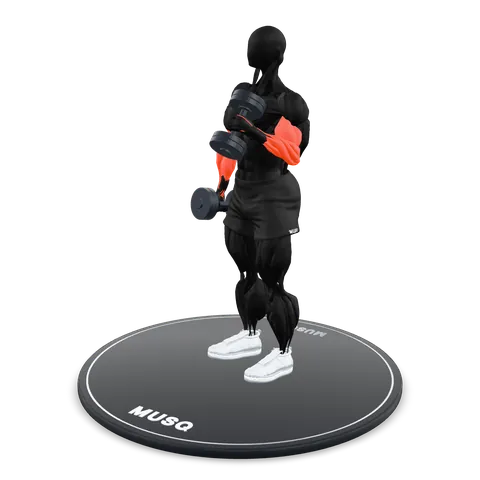
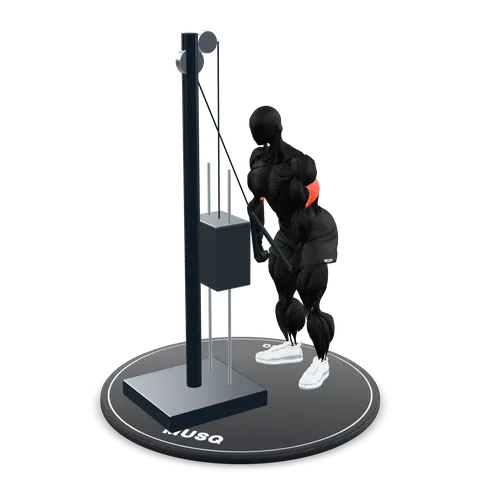
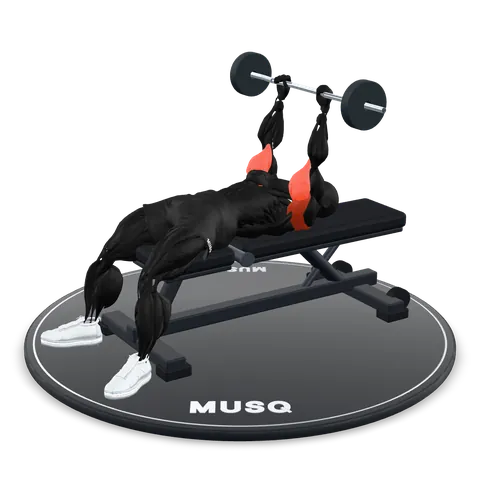
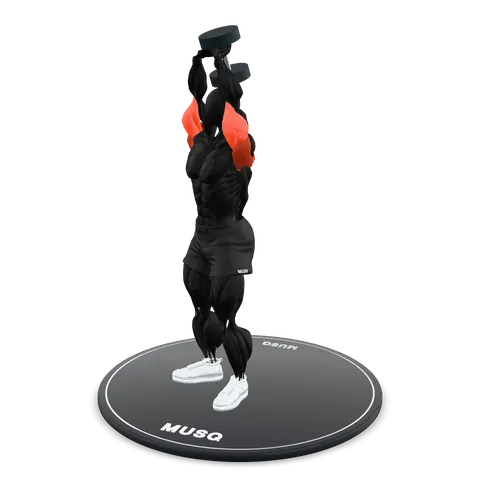
Estimated activation, matching the orange paint on the 3D model.
- Biceps Brachiiprimary
- Brachialissecondary
- Brachioradialissecondary
- Forearmssecondary
How to do the dumbbell curl
- Stand tall with a dumbbell in each hand, arms straight at your sides and palms facing forward.
- Pull your shoulders down and back and keep your elbows close to your sides.
- Curl the dumbbells up by bending only at the elbows, keeping your wrists straight.
- Turn your palms fully up and squeeze your biceps at the top, without letting your elbows drift forward.
- Lower the dumbbells slowly until your arms are fully straight.
- Keep your legs and back still; if you have to swing, the weight is too heavy.
Form cues and common mistakes
The same coaching points MUSQ shows on the lifter in the app.
Shoulder Position
The shoulders stay down and back while the arms curl.
Why it mattersShrugging brings the upper traps into the lift, and rolling the shoulders forward carries the upper arms off their fixed place, so the curl stops being an elbow-only movement.
Common mistakeShoulders shrugging up and rolling forward as the dumbbells reach the top.
Do this insteadSet the shoulders down and back before the first rep and keep them level and still to the top of every curl.
Elbow Position
The elbows stay by your sides; only the forearms move.
Why it mattersWith the upper arms still, bending the elbows is the only motion, so the elbow flexors lift the dumbbells. Letting the elbows drift forward brings the front deltoids in and turns the top of the curl into a front raise.
Common mistakeElbows drifting forward and up as the dumbbells rise.
Do this insteadKeep the elbows close to the ribs and finish each curl with the dumbbells in front of the chest, palms facing the shoulders, the elbows still at your sides.
Grip and Wrists
Palms forward from the start and turned up all the way, wrists straight.
Why it mattersIn trained lifters, curls with the palms turned up have worked the biceps harder than palm-in or palm-down curls. Curling the wrists in moves the weight with the wrists instead of the elbows, and a bent wrist grips far more weakly.
Common mistakeWrists curling in toward the forearms as the dumbbells reach the top.
Do this insteadHold the handles palms-forward with the arms hanging, keep the palms turned up as they rise, and keep the knuckles in line with the forearms from bottom to top.
Body Swing
The legs and back stay out of it.
Why it mattersLeaning back or pushing the hips forward borrows momentum from the hips and lower back to get the dumbbells moving, so the elbow flexors skip the heaviest part of the rep, with the forearms near level.
Common mistakeLeaning back and pushing the hips forward to swing the dumbbells up.
Do this insteadStand tall and braced, curl in about a second, pause briefly at the top and take about two seconds to lower, so each rep starts from a still body.
Range of Motion
Each rep starts from straight arms.
Why it mattersThe first part of the curl is the lightest, so it is easy to cut short. Lowering until the arms are straight takes the elbow flexors through their whole range, and in new lifters, full-range curl training has built more strength than mid-range partial reps.
Common mistakeShort reps that turn round with the elbows still bent, the dumbbells never getting back to the thighs.
Do this insteadLower under control until the arms hang straight by your sides, then curl again without bouncing.
● Free on the App Store
Train every lift in 3D with MUSQ
Nearly 500 exercises in 3D, x-ray set-up demos, stretching and a plan built around the days you train. MUSQ is free on iPhone.
Dumbbell Curl FAQ
What muscles do dumbbell curls work?
Mainly the biceps brachii, with the brachialis underneath and the brachioradialis in the forearm helping to bend the elbow.
Should you curl both arms together or alternate?
Both work. Curling together saves time and keeps the body still; alternating lets you focus on one arm at a time and often allows a little more weight.
How do I stop swinging when I curl?
Use a lighter weight, keep your elbows pinned to your sides and lower each rep slowly. Standing with your back against a wall is a simple way to learn it.