Shoulders · Cable · Beginner
Face Pull
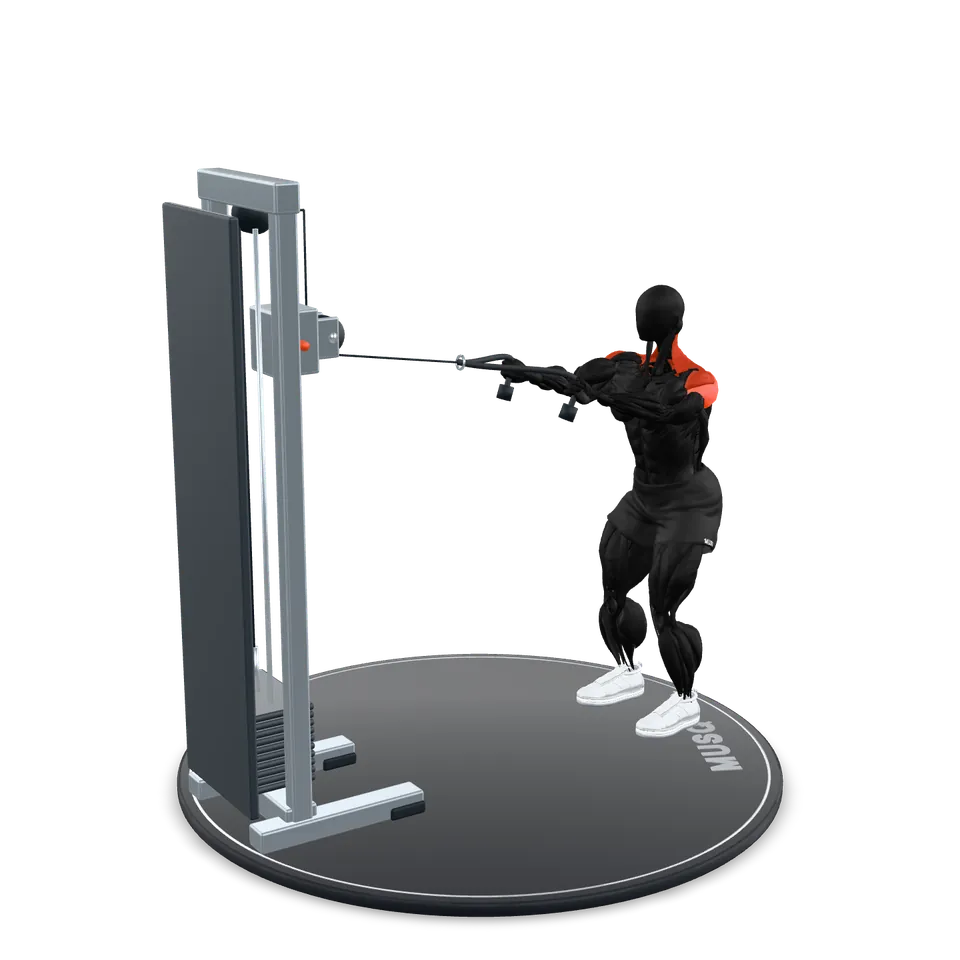
The face pull trains the rear delts, middle traps and the rotator cuff with a rope on a high cable. You pull the rope toward your face, split it apart and rotate your shoulders outward. It balances all the pressing most people do and is one of the best exercises for healthy shoulders and posture.
- Primary muscles
- Posterior Deltoid
- Equipment
- Cable
- Level
- Beginner
- Sets × reps
- 3–4 × 12–20
- Rest
- 60–90 s
Muscles worked
Estimated activation, matching the orange paint on the 3D model.
- Posterior Deltoidprimary
- Middle Trapeziussecondary
- Rotator Cuffsecondary
- Lateral Deltoidsecondary
How to do the face pull
- Set a cable pulley at about head height with a rope attachment and hold one end in each hand, thumbs pointing back toward you.
- Step back until your arms are straight and stand tall with your feet planted.
- Pull the rope toward your face, keeping your elbows high, at or above shoulder height.
- As the rope reaches your face, pull the ends apart and rotate your shoulders so your hands finish beside your ears.
- Squeeze your shoulder blades together for a moment at the end.
- Let the rope return slowly until your arms are straight again, keeping your body still.
Form cues and common mistakes
The same coaching points MUSQ shows on the lifter in the app.
Pull Target
The rope comes to the face, not the chest.
Why it mattersPulling toward the eyes keeps the upper arms up and out, so the rear deltoids and external rotators do the work.
Common mistakeRowing the rope down to the chest, which turns it into a cable row for the lats.
Do this insteadSet the pulley at about upper-chest to face height and pull the middle of the rope toward the eyes.
External Rotation
A face pull finishes with an outward rotation of the shoulders.
Why it mattersPulling the rope ends apart and turning the knuckles back trains the infraspinatus and teres minor, the rotator cuff muscles that balance heavy pressing.
Common mistakeStopping with the hands in front of the face and the forearms pointing forward.
Do this insteadSplit the rope as it nears the face and finish with the hands beside the ears, knuckles pointing back.
Elbow Height
The elbows stay at or above shoulder height.
Why it mattersHigh, wide elbows keep the pull horizontal for the posterior deltoid; low elbows turn it into a row.
Common mistakeElbows dropping below the hands and tucking into the sides.
Do this insteadLead with the elbows, keeping them level with or slightly above the shoulders.
Shoulder Blades
Let the shoulder blades move, under control.
Why it mattersDrawing the shoulder blades together at the finish brings in the middle trapezius alongside the rear deltoids.
Common mistakeShoulders rounding forward throughout, or the rope yanked in with a jerk.
Do this insteadSqueeze the shoulder blades together at the end of each rep, then let them glide forward as the rope returns.
Stance
The body stays still while the arms pull.
Why it mattersA staggered stance and braced trunk stop you leaning back and using body weight to move the stack.
Common mistakeLeaning back further on every rep to keep the weight moving.
Do this insteadStand with one foot slightly ahead, brace the core and keep the torso still.
● Free on the App Store
Train every lift in 3D with MUSQ
Nearly 500 exercises in 3D, x-ray set-up demos, stretching and a plan built around the days you train. MUSQ is free on iPhone.
Face Pull FAQ
What muscles do face pulls work?
The rear deltoids, the middle traps and rhomboids between the shoulder blades, and the rotator cuff muscles that rotate the shoulder outward.
Are face pulls good for posture?
They strengthen the muscles that pull the shoulders back and rotate them out, which balances heavy pressing and long hours sitting. They help most when done regularly and with light weight.
Should face pulls go to the face or the chest?
To the face. Pulling to the chest with low elbows turns it into a row and loses the outward rotation that makes the exercise worthwhile.