Abs · Bodyweight · Beginner
Plank
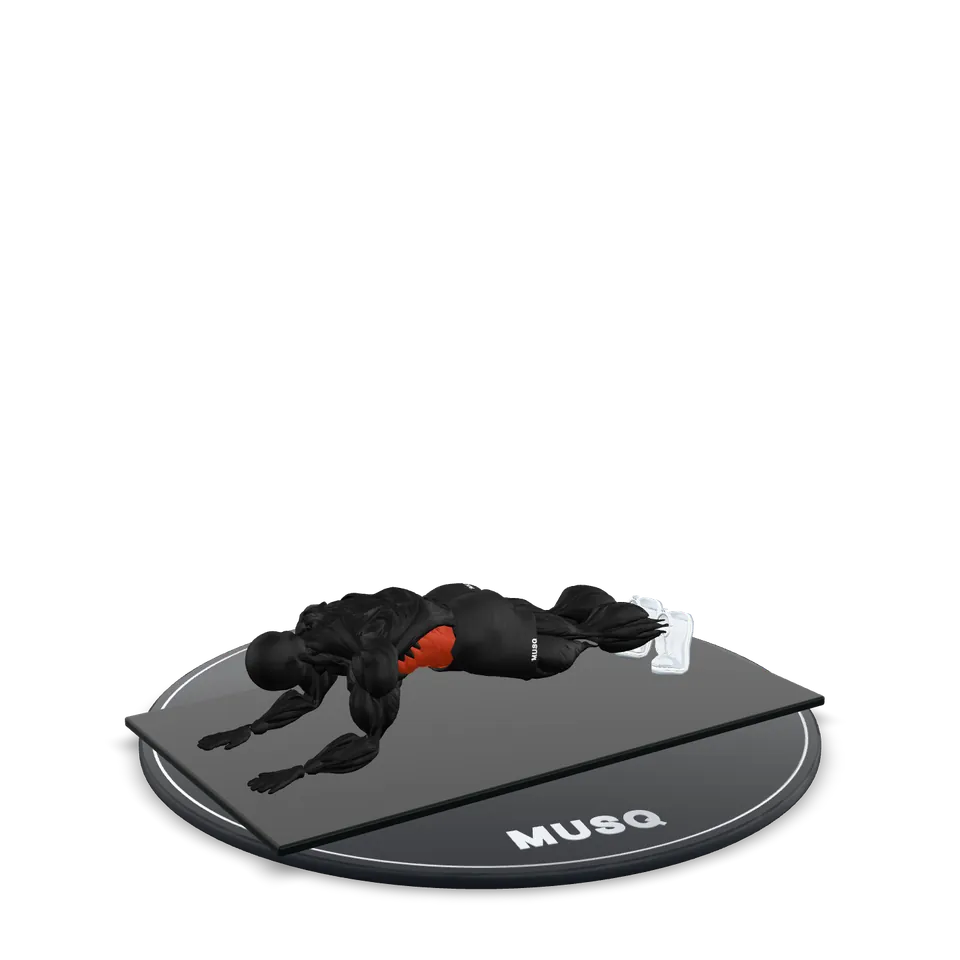
The plank is the classic core hold. Resting on your forearms and toes, you hold your body in one straight line from head to heels. It trains the abs to resist sagging, and it only works while that line stays straight, so quality matters more than time.
- Primary muscles
- Rectus Abdominis
- Equipment
- Bodyweight
- Level
- Beginner
- Sets × reps
- 3–4 × 20–60 s
- Rest
- 45–60 s
Muscles worked
Estimated activation, matching the orange paint on the 3D model.
- Rectus Abdominisprimary
- Obliquessecondary
How to do the plank
- Lie face down, then come up onto your forearms with your elbows under your shoulders.
- Set your feet about hip width apart and lift your hips so your body forms a straight line.
- Brace your abs as if about to be poked in the stomach and squeeze your glutes.
- Keep your neck long, looking at the floor just in front of your hands.
- Push the floor away with your forearms so your upper back doesn't sag.
- Breathe steadily and stop the set as soon as your hips sag or pike up.
Form cues and common mistakes
The same coaching points MUSQ shows on the lifter in the app.
Body Line
The hold is only useful while the line is straight.
Why it mattersA straight body makes the abdominals resist gravity pulling the hips down, which is the whole point of the plank.
Common mistakeHips sagging toward the floor, or piked up to rest.
Do this insteadLine up ears, shoulders, hips and ankles and hold it there.
Elbow Position
Stack the shoulders over the elbows.
Why it mattersElbows under the shoulders let the upper body rest on bone, so the effort stays in the trunk.
Common mistakeElbows far in front of the shoulders, or the shoulder blades collapsing together.
Do this insteadPlace the elbows under the shoulders and push the floor away to spread the shoulder blades.
Bracing
Brace as if about to be poked in the stomach.
Why it mattersPulling the ribs toward the pelvis tilts it slightly back, which increases abdominal activity compared with a relaxed plank.
Common mistakeHolding the breath with the lower back arched.
Do this insteadTuck the pelvis slightly, squeeze the glutes, pull the ribs down and keep breathing.
Head Position
The neck is part of the line.
Why it mattersA neutral neck keeps the shoulders from shrugging and the line honest.
Common mistakeDropping the head or craning it up to look forward.
Do this insteadLook at the floor just in front of the hands.
Feet
The feet anchor the back of the plank.
Why it mattersPressing back through the heels tightens the legs and glutes, which helps hold the pelvis in place.
Common mistakeLegs relaxed, with the weight sinking into the hips.
Do this insteadFeet hip-width, toes tucked, legs straight and pressing back.
● Free on the App Store
Train every lift in 3D with MUSQ
Nearly 500 exercises in 3D, x-ray set-up demos, stretching and a plan built around the days you train. MUSQ is free on iPhone.
Plank FAQ
What muscles does the plank work?
Mainly the rectus abdominis and the deep core, with the obliques, glutes and shoulders helping to hold the line.
How long should you hold a plank?
As long as your body stays in a straight line, usually 20 to 60 seconds. Several good holds beat one long hold with sagging hips.
Does planking burn belly fat?
No exercise burns fat from one spot. Planks strengthen the core; losing belly fat comes from your overall diet and activity.