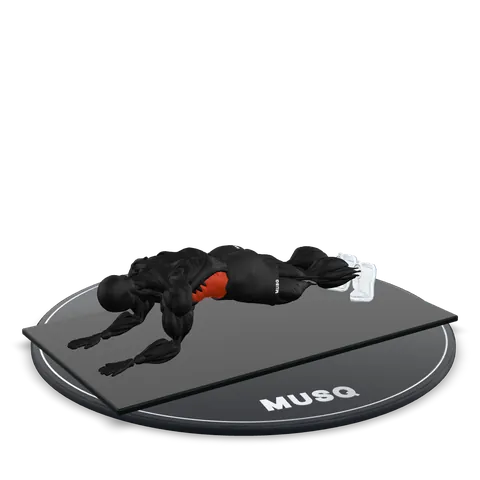
Abs · Bodyweight · Advanced
Hanging Leg Raise
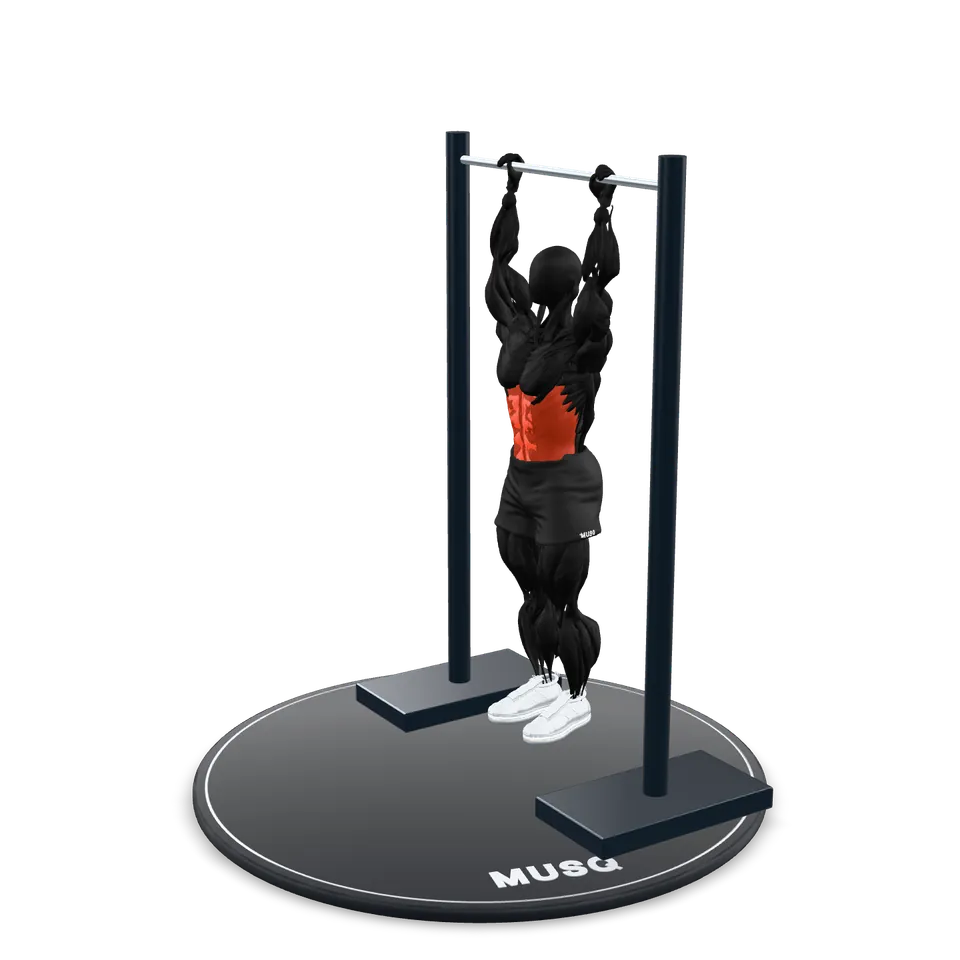
The hanging leg raise is one of the hardest ab exercises. Hanging from a pull-up bar, you raise your straight legs in front of you. The hip flexors lift the legs, but the abs only work hard when you curl your pelvis up at the top, so control matters more than height.
- Primary muscles
- Hip Flexors, Rectus Abdominis
- Equipment
- Bodyweight
- Level
- Advanced
- Sets × reps
- 3–4 × 6–15
- Rest
- 60–90 s
Muscles worked
Estimated activation, matching the orange paint on the 3D model.
- Hip Flexorsprimary
- Rectus Abdominisprimary
- Obliquessecondary
How to do the hanging leg raise
- Hang from a pull-up bar with an overhand grip, arms straight and shoulders pulled down.
- Brace your abs and keep your legs together and straight.
- Raise your legs in front of you without swinging.
- As your legs pass hip height, curl your pelvis up so your lower back rounds slightly toward the bar.
- Pause, then lower your legs slowly until they hang straight below you.
- Let any swing settle before the next rep; bend your knees to make it easier.
Form cues and common mistakes
The same coaching points MUSQ shows on the lifter in the app.
Hang
A steady hang keeps the lift honest.
Why it mattersShoulders pulled slightly down and a firm grip stop the body swinging as the long legs move.
Common mistakeHanging loose and swaying.
Do this insteadGrip just outside shoulder-width and set the shoulders down away from the ears.
Pelvic Tilt
The abs work when the pelvis curls, not while the legs travel.
Why it mattersThe hip flexors lift the straight legs; the abdominals are worked most as the pelvis tilts back at the top.
Common mistakeLifting the legs with the lower back arched throughout.
Do this insteadAs the legs reach level, curl the pelvis up and slightly forward.
Leg Position
Straight legs make a long, heavy lever.
Why it mattersStraight legs put the weight of the legs much further from the hip than a knee raise does, so the trunk has to work harder to control the pelvis.
Common mistakeBending the knees halfway up to make it easier, then calling it a leg raise.
Do this insteadKeep the knees straight and lift the feet at least to hip height.
Control
The way down decides the next rep.
Why it mattersA slow return stops the legs swinging back and throwing the next rep up with momentum.
Common mistakeDropping the legs and swinging into the next rep.
Do this insteadLower over two seconds and pause at the bottom.
Upper Body
Stay under the bar.
Why it mattersA still torso keeps the effort in the hips and trunk.
Common mistakeLeaning back to counterbalance the legs.
Do this insteadArms straight, chest under the bar.
● Free on the App Store
Train every lift in 3D with MUSQ
Nearly 500 exercises in 3D, x-ray set-up demos, stretching and a plan built around the days you train. MUSQ is free on iPhone.
Hanging Leg Raise FAQ
What muscles do hanging leg raises work?
The hip flexors lift the legs and the rectus abdominis curls the pelvis, with the obliques helping. Your grip, lats and shoulders work to hold the hang.
Are hanging leg raises good for lower abs?
Yes, as long as the pelvis curls up at the top. Just swinging the legs up mostly works the hip flexors.
How do I stop swinging on hanging leg raises?
Keep your shoulders pulled down, lower each rep slowly and pause at the bottom until you're still. Bent-knee raises are an easier way to learn the control.